
Deck & Outdoor Kitchen Projects: How to Make New Additions Feel Like They’ve Always Been There
Summer in the Pacific Northwest arrives like a reward. After months of grey skies and steady rain, the sun finally shows up — and suddenly, every homeowner with a backyard starts thinking the same thing: this is the year.
This is the year for the deck. The outdoor kitchen. The covered patio where the whole family actually gathers. And if you’ve been putting it off, 2026 might be the best time yet to stop thinking and start building.
But here’s the question that stops most projects before they start: “Is it going to look like we just bolted something onto the house?”
There’s a clear difference between a deck that looks “added on” and a deck that looks like it belongs. The difference isn’t always about budget. It’s about how well the new construction speaks the same visual language as the rest of the home.
When it’s done right, visitors can’t tell where the original house ends and the addition begins. When it’s done wrong, the structure announces itself immediately — the wrong wood tone, a roofline that fights the house, railings that feel like they came from a different decade.
NAHB Research
According to NAHB research, homeowner satisfaction with outdoor additions is strongly tied to how well the new structure integrates visually with the existing home. (National Association of Home Builders, nahb.org)
Beyond aesthetics, cohesion directly affects resale value. Appraisers and buyers notice when outdoor additions feel disjointed — and it quietly reduces your return on investment. A well-integrated deck or outdoor kitchen, on the other hand, reads as part of the home’s overall livability and can positively influence how the home is perceived by appraisers and prospective buyers.
According to the National Association of Home Builders, outdoor living improvements consistently rank among the highest-return remodeling investments homeowners can make — but only when executed with quality materials and thoughtful visual integration.
Material Matching: The Foundation of Every Cohesive Outdoor Project
Before a single board is cut or a post is set, the most important decisions are already being made: what materials will you use, and how will they relate to what’s already there?
This is where many outdoor projects go sideways — not because of poor craftsmanship, but because material choices were made in isolation, without careful reference to the existing home.
Decking Materials and Your Home’s Architectural Character
The decking surface sets the tone for everything else. In the Pacific Northwest, where moisture, UV exposure, and temperature fluctuation all need to be accounted for, material selection is both an aesthetic and a performance decision.
Composite decking (Trex, TimberTech, Fiberon). Composite offers exceptional durability in the PNW’s wet climate and comes in a wide range of tones and textures. For homes with modern or contemporary architecture — clean lines, flat rooflines, neutral palettes — composite often provides the tightest visual fit.
Pressure-treated or cedar wood. Natural wood brings warmth and organic texture that suits craftsman, farmhouse, and traditional PNW home styles especially well. The key is matching the wood’s stain or finish to the existing trim, siding, or window frames. A close color relationship creates visual continuity even across different materials.
Ipe and exotic hardwoods. Dense, dark, and exceptionally long-lasting, hardwood decking tends to work best on homes with architectural confidence — high-end contemporaries or craftsman builds where the outdoor space is meant to make a design statement.
Material Matching Checklist — Before You Choose Your Decking
What is the primary exterior cladding material of your home? (fiber cement, wood siding, brick, stucco — and what color family?)
What tone is your trim, fascia, and window framing? (warm brown, cool grey, crisp white?)
What does your roofline look like? (pitch, overhang depth, soffit finish)
Are there existing hardscape elements — pathways, patios, retaining walls — that the new build needs to reference?
What is the overall architectural style of your home? (craftsman, contemporary, traditional, farmhouse, mid-century)
Railing Systems: The Most Visible Cohesion Moment
If material selection is the foundation, railing design is where cohesion is most clearly on display. Railings sit at eye level. They’re the first thing guests touch. They’re visible from the street and from inside the home.
The most common cohesion mistake in railing selection is choosing a style that doesn’t match the home’s era or architectural personality. A sleek cable railing system looks sharp on a modern home but can feel jarring on a traditional craftsman. Ornate balusters can overwhelm a clean-lined contemporary exterior.
MacCoy Home Solutions walks every client through railing options specifically in relation to the existing home’s architectural language — not just what’s trending or what’s in stock.
Post Profiles and Column Detailing
Structural posts don’t have to be purely utilitarian. Wrapped posts, tapered columns, and beam profiles can all reference architectural elements already present on the home — porch columns, window surrounds, fascia details — to create a line of visual continuity that makes the addition feel designed, not constructed.
Roofline Alignment and Structural Transitions: Where the Details Live
Even the most carefully matched materials can be undermined by a structural relationship that doesn’t work. How an outdoor structure connects to the existing home — specifically, how its roofline and framing relate to the house’s existing roofline — determines whether the addition looks architectural or accidental.
Covered Patios and Attached Roof Structures
A covered patio attached to the house must reference the existing roof pitch and fascia profile wherever structurally feasible. A pitch that’s wildly different from the main roofline creates visual dissonance that no amount of material matching can fully resolve.
The cleanest approach is to extend the existing roofline — maintaining the same pitch, matching the shingles or roofing material, and aligning the new fascia with the original fascia. When that’s not feasible, a complementary lean-to design that references the home’s pitch reads as intentional rather than improvised.
Transition Zones: Where Inside Meets Outside
The threshold between interior and exterior — the door, the step, the transition surface — is one of the most important points of cohesion in any outdoor project. A flooring material that flows naturally from the interior (or carefully references it) creates a sense of spatial continuity. An abrupt, disconnected material change breaks the narrative the moment you step through the door.
On projects incorporating large sliding or folding glass doors that open to a deck or patio, MacCoy Home Solutions pays careful attention to floor-level alignment and threshold material selection. These are the details that separate an outdoor space that feels designed from one that feels finished.
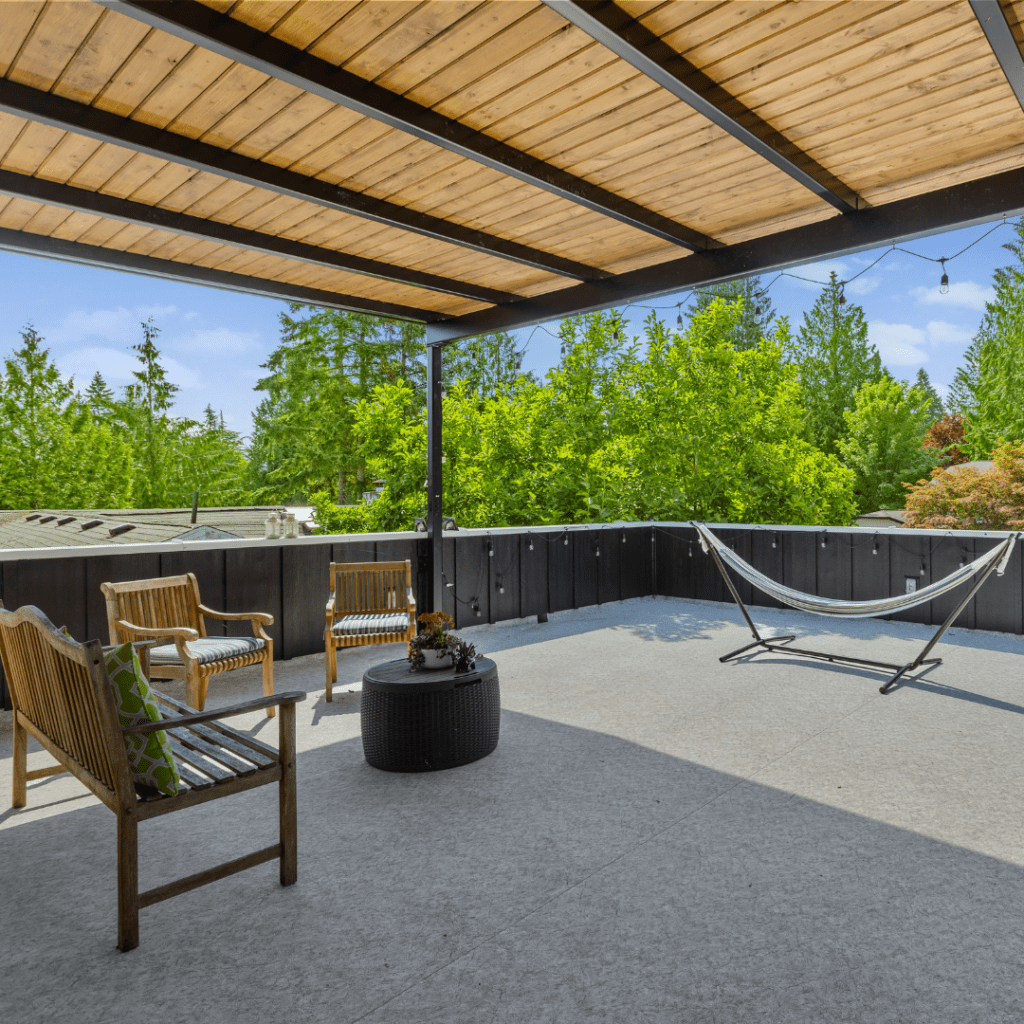
Outdoor Kitchens: Building a Functional Space That Feels Like It Belongs
Outdoor kitchens have moved well past the basic grill-on-a-concrete-pad stage. Today’s builds include full prep counters, outdoor-rated cabinetry, built-in appliances, refrigeration, plumbed sinks, and fire features — all designed to function as a true extension of the home’s entertaining space.
But a well-equipped outdoor kitchen that looks visually disconnected from the home is a missed opportunity. The same design logic applies: material relationships, structural alignment, and a consistent visual language.
Counter Materials and Cabinet Finishes
The most cohesive outdoor kitchens reference the interior kitchen in at least one or two material choices — a countertop profile, a tile detail, a hardware finish — without attempting to replicate it exactly. The goal is family resemblance, not imitation.
In the Pacific Northwest climate, outdoor counter material selection also has to account for moisture, freeze-thaw cycles, and UV exposure. Concrete, porcelain tile, granite, and certain engineered stones all perform well in outdoor applications. Materials that look identical indoors will often fail quickly in the elements — MDF-core cabinetry and unsealed natural stone countertops rated for interior use, for example, can warp, delaminate, or crack within a single PNW winter season when exposed to sustained moisture and freeze-thaw cycles.
The Appliance and Feature Package
A well-planned outdoor kitchen typically starts with a dedicated prep surface, covered storage, and weatherproof cabinetry. Mid-tier builds add a built-in refrigerator, side burners, and a plumbed sink. Full outdoor kitchen builds can include pizza ovens, smokers, bar seating, infrared heating panels, and integrated audio.
MacCoy Home Solutions works with each client to build a feature package that fits both the budget and the way the household actually entertains — not the most impressive spec sheet, but the right configuration for how the space will actually be used.
Outdoor kitchens are one of many outdoor living services MacCoy Home Solutions offers across Lynnwood and Snohomish County. See our full services overview to explore the full range of what we build.
Gas, Plumbing, and Electrical Planning
A genuinely functional outdoor kitchen requires proper infrastructure: gas line extensions, waterproofed electrical circuits, and plumbing, if a sink is included. These elements need to be planned from the project’s outset, not retrofitted after the structure is framed. MacCoy Home Solutions coordinates all trades on outdoor kitchen projects to ensure every rough-in is in place before finish work begins.
Ready to plan your deck or outdoor kitchen for this summer?
How MacCoy Home Solutions Approaches Every Outdoor Project
Every outdoor project MacCoy Home Solutions builds starts with the same question: how does this addition relate to everything that’s already there?
That conversation happens before any design work, before materials are specified, and before any pricing is discussed. Getting the design relationship right from the beginning is what separates an outdoor space that looks finished from one that looks like an afterthought.
And for homeowners whose vision extends beyond a deck — to an ADU, a ground-up build, or a full outdoor expansion — MacCoy Home Solutions handles larger-scale projects with the same process and standards.
The Design Cohesion Walkthrough
Our process begins with a thorough walk of the existing home — exterior materials, architectural details, roofline profiles, existing hardscape — before any outdoor addition is drawn. This gives us the reference points to make material and structural recommendations that will actually read as intentional.
We bring material samples to these conversations. We talk not just about what you want to build, but also how it will relate to what’s already there. And we’re direct with clients when a particular combination won’t work visually — because the goal is an outcome you’ll be proud of in ten years, not just one that’s completed on schedule.
Daily Communication Through BuilderTrend
Every MacCoy Home Solutions project runs on the BuilderTrend platform. Clients receive daily updates, progress photos, and real-time schedule visibility from day one through the final walkthrough. You’ll never have to wonder what’s happening on your job site.
This matters especially on outdoor builds, where weather windows, material deliveries, and trade sequencing can affect the schedule. We communicate those changes proactively — before they become surprises at the job site.
On-Schedule Delivery Through the PNW Summer Window
Summer in the Pacific Northwest moves fast. MacCoy Home Solutions does not overbook our project calendar. When we commit to a start date, we staff it and show up — without pushing your project aside when a different job becomes available.
That scheduling discipline is one of the things our clients notice most, and one of the clearest differences between MacCoy Home Solutions and a contractor juggling five projects simultaneously with no dedicated crew. Learn more about who we are and how we work — including the awards and recognition that reflect the standard we hold ourselves to.
We don’t just build outdoor spaces. We build outdoor spaces that feel like they were always part of the plan — because that’s the only kind worth building.
When to Start Planning Your Outdoor Project
If you want your deck or outdoor kitchen ready for summer entertaining, the conversation needs to start now. Outdoor build projects in the Pacific Northwest typically require 8 to 12 weeks from initial consultation to completed installation — factoring in design, permitting (required for most permanent structures), material procurement, and scheduling.
Homeowners who start conversations in April are the ones hosting in July. Homeowners who wait until June are looking at a late-summer or fall start at best.
Permit timelines in Snohomish County and surrounding jurisdictions vary by project type and municipality, and MacCoy Home Solutions handles the permitting process on every project that requires it. Starting early gives us the best window to navigate that process without compressing the build schedule.
Browse our project gallery to see completed deck and outdoor kitchen builds across Lynnwood and Snohomish County — and get a realistic sense of what’s possible for your property.
Your best summer starts with a conversation this spring.
Build It Once. Build It Right. Build It to Belong.
The goal of any outdoor addition isn’t just to add a feature to your home. It’s to add a space that genuinely feels like part of the home — that you’re proud to walk guests through, that reads as designed and deliberate, and that holds its value over time.
That outcome is determined at the very beginning of the project: material choices made with the existing home in mind, structural relationships thought through before a single measurement is taken, and design conversations had by a team that understands the difference between built and designed.
MacCoy Home Solutions delivers outdoor additions across Lynnwood and Snohomish County that aim to pass the ultimate test: when it’s done right, no one should be able to tell where the original home ends and the addition begins. If that’s the standard you’re holding your project to, let’s start the conversation.