
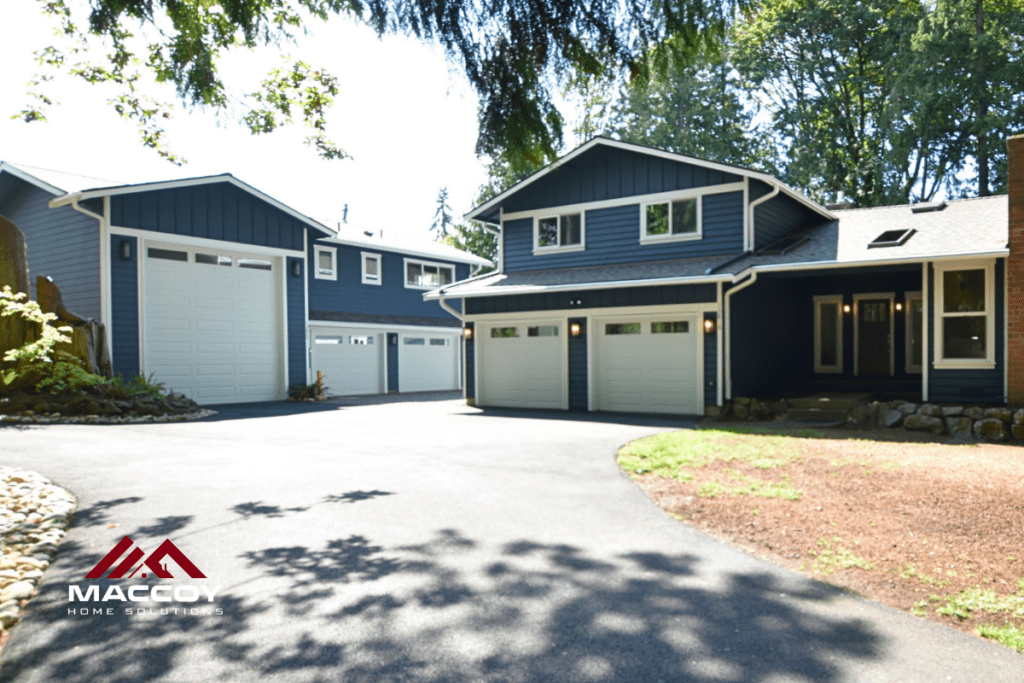
Why More Homeowners Are Adding ADUs Right Now
Picture this: your aging parent needs to be closer to family, your college graduate is moving back home, or you’ve been eyeing that unused backyard space wondering if it could generate rental income. If any of these situations sound familiar, you’re not alone — and an Accessory Dwelling Unit (ADU) might be exactly the solution you’ve been looking for.
ADU permitting has surged across Washington State in recent years, driven by rising housing costs, changing family dynamics, and new legislation that has made it easier than ever for homeowners to add livable space on their existing property. According to the National Association of Home Builders (NAHB), ADUs are among the fastest-growing housing types in the country — a trend driven in large part by states like Washington that have removed longstanding regulatory barriers. The Seattle metro area is no exception.
Before you break ground, though, there’s an important question every homeowner needs to answer: Is my property actually ready for an ADU? The answer involves more than just having a backyard. Zoning, lot size, utilities, existing structure condition, and local permitting requirements all play a role — and understanding each one can save you significant time and money.
That’s where MacCoy Home Solutions comes in. As a licensed, bonded, and insured general contractor serving Edmonds, Woodinville, Lynnwood, Bothell, and surrounding communities, MacCoy Home Solutions guides homeowners through the entire ADU process — from initial feasibility through final inspection. This checklist is a great place to start.
What Is an ADU — And Is It Right for Your Property?
Not all ADUs are created equal, and understanding the difference between types can help you figure out which option fits your property and goals.
- An Attached ADU is connected to your existing home — think a converted garage, a finished basement with a separate entrance, or a suite above the garage.
- A Detached ADU (DADU) is a fully separate structure on your lot — a backyard cottage, a carriage house, or a newly built standalone unit.
- A Junior ADU (JADU) is created entirely within the footprint of your existing home, typically converted from a bedroom or other interior space, and is usually limited to 500 square feet.
Homeowners across the Pacific Northwest are building ADUs for a wide range of reasons: generating monthly rental income, housing a family member close by without sacrificing privacy, creating a dedicated home office or studio, or simply increasing their property’s long-term value. Research tracked by the NAHB suggests that properties with ADUs may sell at a premium in many markets — a meaningful potential return on an investment that also improves daily quality of life.
Washington State passed legislation in recent years (including HB 1337) that expanded ADU rights for homeowners and removed many of the barriers that previously made ADU projects difficult to pursue. In short, 2026 is an ideal time to explore what’s possible on your property. MacCoy Home Solutions offers free consultations to help you evaluate your options and determine the best path forward.
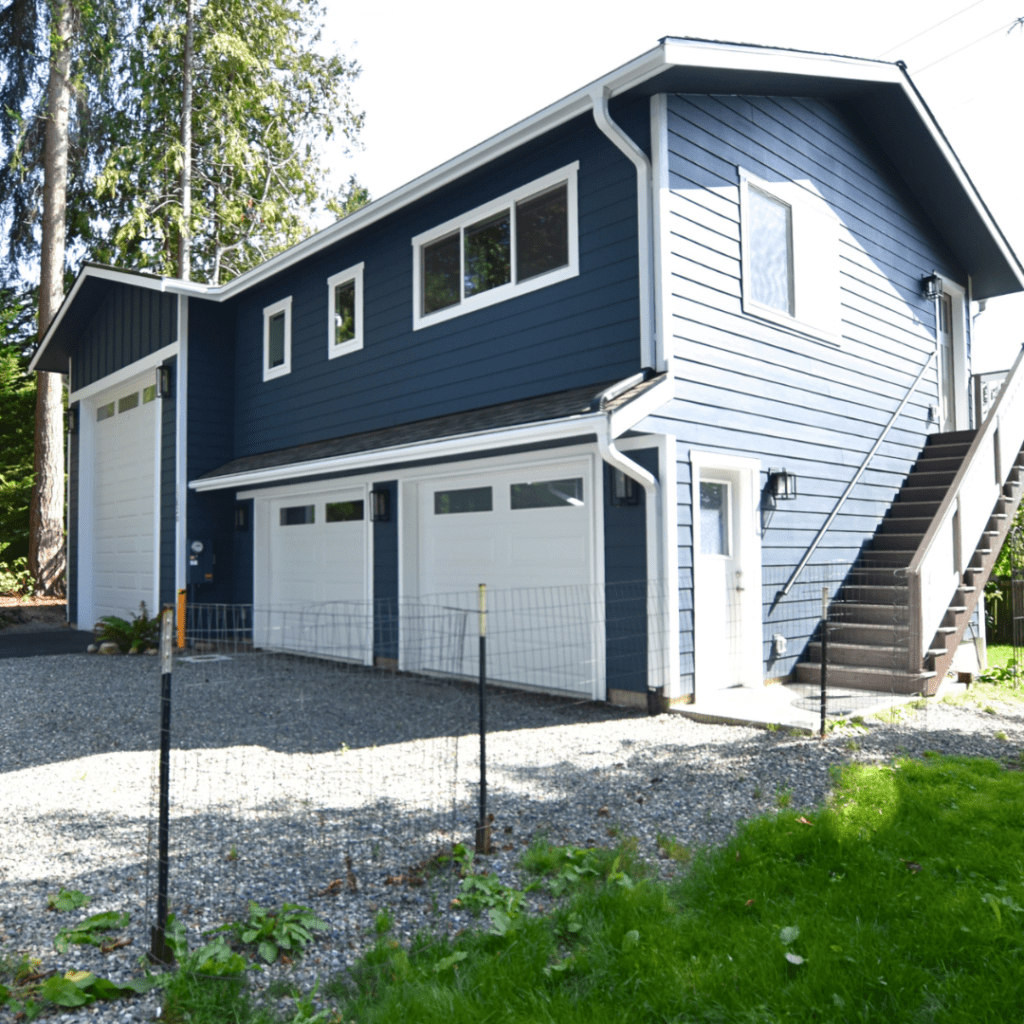
The ADU Feasibility Checklist: What to Assess Before You Build
Here is a practical breakdown of what every homeowner should evaluate before committing to an ADU project. Working through these questions early will help you budget accurately, avoid surprises, and move through permitting more efficiently.
Lot Size and Setback Requirements
Most municipalities require a minimum lot size before allowing an ADU — typically somewhere in the range of 4,000 to 6,000 square feet, though this varies by city and zoning district. Beyond lot size, setback requirements dictate how far any new structure must sit from your property lines, existing buildings, and easements.
These numbers are not universal. Edmonds, Woodinville, Shoreline, and Mountlake Terrace each have their own codes, and even adjacent neighborhoods within the same city can fall under different overlays. Your property survey is the best starting point, and your city’s planning department can confirm current setback rules.
MacCoy Home Solutions is fluent in local permit requirements across Snohomish and King Counties — we navigate these rules on your behalf so you don’t have to become a zoning expert.
Zoning Classification and Local Regulations
Thanks to Washington State’s recent preemption legislation, most single-family residential zones (RS zones) now allow ADUs by right — meaning you don’t need a variance or special exception just to apply for a permit. That’s a significant shift from where things stood just a few years ago.
However, zoning is only the first layer. Homeowners also need to check: whether their HOA covenants restrict ADU construction or short-term rentals, whether their property falls within a historic district overlay that limits exterior modifications, and whether local short-term rental ordinances affect how they plan to use the unit.
All three of these factors can affect feasibility even when zoning is fully permissive — which is why a thorough upfront review is so important.
Utility Capacity: Water, Sewer, and Electrical
A new living unit places real demands on your home’s existing infrastructure. Before design work begins, homeowners should verify three things: whether the water meter and service line can handle an additional unit’s demand, whether the sewer line has sufficient capacity and is in good condition, and whether the electrical panel — typically 200-amp service is required — can support an ADU.
New ADU construction in Washington must comply with the Washington State Energy Code (WSEC), which is based on the International Energy Conservation Code (IECC) and includes specific requirements for insulation R-values, window efficiency ratings, air sealing, and mechanical ventilation. For general guidance on energy-efficient residential construction standards, Energy.gov’s homeowner resources are a useful supplementary reference. Utility upgrades are common and should be factored into your project budget from the start. MacCoy Home Solutions coordinates with licensed electrical, plumbing, and mechanical subcontractors to handle all utility work as part of a seamless build process.
Existing Structure Condition (For Conversions)
If you’re converting a garage, basement, or bonus room rather than building new, the existing structure must meet current building code requirements for habitable space. That includes minimum ceiling heights (typically 7 feet), properly sized egress windows, adequate insulation, moisture barriers, and a code-compliant heating and cooling solution.
Older homes — particularly those built before 1980 — may also require asbestos or lead paint abatement before conversion work can begin, which adds both time and cost to the project timeline. MacCoy Home Solutions has deep experience with structural conversions across the region; explore our interior remodeling portfolio for examples of the craftsmanship and attention to detail we bring to every project.
Parking and Access Requirements
Some jurisdictions require that if you convert a garage into living space, you must provide a replacement parking space elsewhere on the property. This requirement has been relaxed in many Washington cities, but it’s worth confirming before finalizing your design.
Detached ADUs also need to meet access and addressing requirements: a clear pathway to the unit’s entrance, a separate address for mail and emergency services, and in some cases specific landscaping or paving conditions. MacCoy Home Solutions is well-versed in the access requirements across Edmonds, Woodinville, Bothell, and Lynnwood — we build these details into every project plan.
How Much Does It Cost to Build an ADU in the Seattle Metro Area?
Cost is almost always the first question homeowners ask, and the honest answer is: it depends on the type of ADU, the condition of your existing property, and your finish level. That said, here are realistic 2026 ranges for the greater Seattle area:
- Attached ADU conversion (garage, basement, bonus room): $80,000–$150,000
- Detached ADU / DADU (new construction): $150,000–$350,000+ depending on size, foundation type, and finishes
These figures cover the full project: design and permitting (typically 10–15% of total cost), site preparation and foundation, framing, mechanical and electrical work, insulation and drywall, finishes, and landscaping restoration.
The financial case for an ADU is compelling for many homeowners. According to RentCafe rental market data (December 2025), one-bedroom apartments in Edmonds average approximately $1,600–$1,900 per month, with the majority of the market falling in the $1,501–$2,000 range. For homeowners who build a well-designed DADU, that level of consistent rental income can meaningfully offset construction costs over time — and for many, the long-term income potential makes the investment financially compelling.
MacCoy Home Solutions provides detailed, transparent estimates with no hidden fees — and backs every project with a 12-month workmanship warranty. Visit our contact page to get started.
Ready to get a clear picture of what your project might cost? Request a free estimate from MacCoy Home Solutions.
The Permitting Process: What to Expect and How Long It Takes
One of the most common surprises for first-time ADU builders is how long the permitting process can take. Here’s a realistic timeline:
- Design and construction drawings: 4–8 weeks
- Permit application submission and city review: 4–16 weeks (varies significantly by jurisdiction)
- Permit issuance and construction: 3–6 months depending on project scope
- Inspections and certificate of occupancy: 2–4 weeks following construction completion
Edmonds and Woodinville each have their own ADU permit workflows, and incomplete applications are one of the most common causes of delays. Working with an experienced ADU contractor who knows the local process can shave weeks — or even months — off your project timeline.
MacCoy Home Solutions handles permitting coordination as a standard part of our full-service approach. You can learn more about how we manage every phase of a project on our Our Process page. If you’re hoping to have your ADU ready by late 2026, beginning the feasibility and design phase now is the right move.
Green Building and Energy Efficiency Standards for ADUs
Washington State requires all new ADU construction to comply with the Washington State Energy Code (WSEC), which is based on the International Energy Conservation Code (IECC). WSEC requirements cover insulation R-values, window efficiency ratings, air sealing, and mechanical ventilation — standards designed to ensure new units are comfortable, efficient, and durable. For additional homeowner guidance on energy-efficient building, Energy.gov offers accessible resources on insulation, windows, and HVAC best practices.
Energy-efficient ADUs cost less to heat and cool, which is a meaningful selling point both for renters evaluating their monthly expenses and for homeowners considering the unit’s long-term appeal. Building to energy code from the start — rather than retrofitting later — is simply smarter economics.
It’s also worth investigating utility rebate programs before you finalize your build specifications. Snohomish PUD and Puget Sound Energy both offer rebates for energy-efficient new construction in some circumstances, which can help offset the cost of higher-efficiency insulation, windows, or HVAC equipment.
Why Working with a Local ADU Contractor Makes All the Difference
ADU projects are not one-size-fits-all — and the complexity of navigating local zoning codes, permit offices, inspection timelines, and subcontractor coordination is real. A contractor who builds ADUs in Snohomish and King Counties every week knows things that a generalist simply doesn’t: which inspectors to call first, how to structure an application to minimize review cycles, and which site conditions in your specific neighborhood are likely to require extra attention.
MacCoy Home Solutions has spent years building relationships and reputation across the Lynnwood, Edmonds, Woodinville, and Bothell communities. As a family-owned company, we approach every project with the kind of care and accountability that larger firms often can’t match. Our team is licensed, bonded, and insured, and we are proud recipients of the 2023 BBB Torch Award for Ethics — presented by the Better Business Bureau in recognition of our commitment to transparency, integrity, and client care. We’ve also been honored with multiple Excellence in Remodeling Awards from both the Master Builders Association and the Building Industry Association of Washington. These are values that show up on every job site, not just in our marketing materials.
Our clients regularly tell us that what sets MacCoy Home Solutions apart is straightforward communication, honest pricing, and a crew that treats their home with respect. We don’t disappear after the estimate — we’re with you from the first site visit through the final walk-through.
Ready to find out if your property is ADU-ready? Schedule a consultation with MacCoy Home Solutions — your trusted DADU builder near Edmonds, Woodinville, and across the greater Seattle area.
Is Your Property ADU-Ready? Take the Next Step
The factors that determine ADU feasibility — lot size and setbacks, zoning and HOA restrictions, utility capacity, existing structure condition, and local permitting timelines — are interconnected, and working through them systematically is the only way to get a reliable answer. The good news is that the process is far more manageable than most homeowners expect when they have an experienced contractor walking alongside them.
Washington State’s evolving ADU laws, combined with strong rental demand across the Seattle metro area, make 2026 an exceptional year to move forward on a project that adds value, flexibility, and income potential to your property. Whether you’re planning a cozy backyard DADU, a polished garage conversion, or a fully equipped basement suite, the right team makes all the difference.
MacCoy Home Solutions is ready to help. Call us at (206) 271-2204 or request your free estimate online today. Let’s build something lasting — together.